Polar Programs

Year Round Equipment for Polar Projects

Here are several documents regarding year round equipment for Polar Projects. Batteries DAS Power Box Sensors Solar Station Enclosure Vaults

Summer Only Enclosure for Polar Projects

Here are several documents regarding summer-only equipment for Polar Projects. Batteries DAS Power Sensors Solar Station Enclosure Vaults

Specialized Polar Equipment

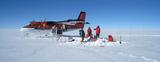
The Polar Program of EarthScope/EPIC is dedicated to supporting with seismological research in the Arctic and Antarctic.  As opposed to traditional seismic stations installations around the world, instrumenting the Arctic or Antarctic require special consideration due to the extreme nature of the climatic conditions, temperature being the primary challenge.

Solar for Summer Only Enclosure

Summer Only Solar Panels

10W or 20W of solar power are usually sufficient for summer only experiment depending on a typical seismic station load.

EarthScope EPIC's Polar Group uses both the Suntech STP010 (10W) and the STP020 (20W).  They are both efficient, monocrystalline silicon solar panels and have strong frames.  A mount was designed in house and manufactured specifically for these panels to attached them directly to our  “summer only” enclosures.

Station Enclosure for Summer Only

For summer only deployments, special and costly, heavy insulation is not needed since the temperature at that time of the year remains high enough that the electronic equipment and batteries will continue to operate normally without a heat source.

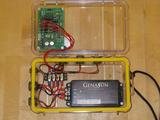
The EPIC Polar Group's summer only enclosures are made of molded,  heavy-duty, lightweight polyethylene on the outside and have closed cell foam liner inside, cut to accommodate the equipment and batteries.  They were designed with portability in mind and their outside dimensions are 24 in x 21 in x 11 in.

To ease deployment, the case was designed to contain all the equipment necessary as long as the sensor is an L28 or smaller.  At the site, only the seismometer needs to be installed and the solar panel needs to be mounted on top of the case.


Solar Equipment for Year Round Polar Programs

Low Power Solar Panel System

This solar panel system uses three Suntech STP020S  (20W) Monocrystalline Silicon solar panels mounted in a triangle to take advantage of the 24 hours a day solar insolation.   With the combination of cold temperature and solar reflection off the snow, this system produces close to 40W worth of solar power all day long in clear conditions.  This is more than adequate for most seismic recorder configurations.

This solar panel system is also very simple and quick to install in snow.  All that is needed is to have the base of the solar system buried in two feet or more of well compacted snow.  No guying is necessary.  Only one solar cable is needed to connect to a junction box located on the post.

Power Box Equipment for Summer Only Enclosure

Solar Charge Controllers

The Solar Charge Controller is responsible to properly charge the batteries when solar energy is available.  The GenaSun GV-4 controller, which is used for summer only experiments,  is a very efficient charge controller that uses the MPPT (Maximum Power Point Tracking) to maximize the power available at the solar panel, increasing the efficiency by 10 to 30% over traditional solar regulators.  It also uses very little power in low or no light conditions.

Power Box Equipment for Year Round Polar Programs

The Extreme-Cold Temperature Power Management Module for Year Round Use

EPIC's Polar Group specifically designed a power management module to control the charging and manage the power system in extreme-cold temperature environments. There are two main parts in the power box:  The solar charge controller and the power switcher.  The solar charge controller, as the name implies, takes care of the proper and efficient charging of the batteries when solar energy is available.  The power switcher takes care of switching from the rechargeable batteries to the primary batteries when the rechargeable batteries' voltage dips below a threshold, and switches from the primary batteries to the rechargeable batteries when the rechargeable batteries' voltage gets high enough from solar charging.  Both the charge controller and the power switcher were tested successfully for operation at -55C after having been subjected to -70C for several hours.

Polar Programs


The EPIC currently supports approximately 60 experiments per year worldwide, with 5-10% currently funded by the National Science Foundation (NSF) Office of Polar Programs (OPP). Polar projects commonly require a level of support that is several times that of seismic experiments in less demanding environments inclusive of very remote deployments (e.g. Tibet). 

The primary focus of the EPIC's Polar support efforts are:

Related categories:

Batteries for Year Round Polar Programs

Rechargeable batteries:

Rechargeable batteries are used for projects using solar and/or wind charging systems. EPIC's Polar Group has used SunXtender AGM batteries by Concord succesfully for many deployments. These batteries, aside from being reliable, offer several advantages. They are sealed and non-spillable, which makes then safer and easier to handle in the field; they have a low self discharge rate, which is important for a low power system, with extended periods of time between charges (arctic conditions); and they are exempt of DOT HazMat requirements (49 CFR Section 173.159) provided that they are shipped in their original package or in a package that satisfies the requirements of 49 CFR 173.159(d).

Syndicate content