Polar Programs

2020 Polar Technology Conference coming in March

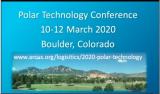
The 2020 Polar Technology Conference is planned for 10–12 March 2020 in Boulder, Colorado. This activity is a cooperative effort among the National Science Foundation’s Office of Polar Programs, the Arctic Research Consortium of the United States, and the polar research community.

Related categories:

EPIC Scientist Describes Working in Antarctica for Enthusiastic Library Audience

On June 23, 2014, EPIC Senior Staff Scientist/Polar Project Field Engineer Dean Childs gave a talk on "Working in Antarctica" to an absorbed audience at the Socorro Public Library.

Dean's talk ran 1 hour and 45 minutes, including a followup Q&A. He discussed several topics with the 25+ attendees, who ranged in age from 7 to 70.

Transantarctic Mountains Deployments


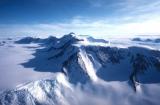
Audrey Huerta, Assistant Professor in the Department of Geological Sciences at Central Washington University, has graciously provided some videos of recent installations and deployments in the Transantarctic Mountains. They include footage of using a chain saw to deploy solar panels in the ice, a time lapse of a polar seismic system installation, and thermochronology sampling while rappelling.

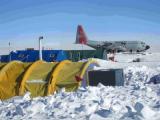
(Photograph courtesy NSF)

EarthScope/EPIC Intern Caps Busy Summer with Alaska Deployment at Poker Flat

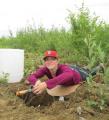
It's been a busy summer for EarthScope/EPIC intern Kasey Aderhold, a PhD Candidate at the Department of Earth & Environment, Boston University. Kasey has been heavily involved in an ongoing comparison of seismic vaults to direct burial installations at two sites: the Dotson Ranch near Socorro, NM, and Poker Flat in Alaska. 


EPIC Staff in the News

It's been an eventful media week for several of the staff of EarthScope EPIC, who were highlighted in a lengthy piece on women in science in the New Mexico Rural Electric Cooperative Association's magazine, enchantment, which is the second largest publication in New Mexico. Then, when a small earthquake rocked Socorro, more EPIC staff were prominently featured in a report on the quake in the local newspaper of record, El Defensor Chieftain.

Related categories:

Facility Plan for Polar Seismic and Geodetic Science is Available

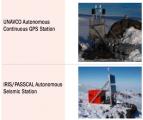
The seismic and geodetic Polar communities have worked with EarthScope and UNAVCO to provide a plan for the growth, development, management and governance of Polar support services for the NSF facilities. This plan is now complete and posted on the EarthScope webpage.

Here is the executive summary from the report:

Related categories:

EPIC Intern Spends Summer on the Ice

EarthScope/EPIC summer intern Alan Shi has some interesting stories to tell about his last few months with the EPIC in Socorro, NM.  The season began calmly enough, and Alan enjoyed developing a testing enclosure to verify that field equipment boxes such as the MEVO (Mt. Erebus Volcanic Observatory) boxes were distributing power properly, as well as performing ruggedness-testing of memory sticks before their use to collect data in arctic regions. But, the most impressive part of Alan's summer by far was his deployment to the rapidly-changing ice sheets of Greenland.  Here are some recollections and photographs of intern Shi's experiences on the ice.


8th annual Polar Technology Conference coming to Vermont in April 2012

The 8th annual Polar Technology Conference will be hosted by EarthScope/EPIC on 3-5 April 2012 at the Lake Morey Resort in Fairlee, Vermont, USA.  Several staff members will be in attendance from both EarthScope (Robert Busby, Kent Anderson, and Katrin Hafner) and EarthScope/EPIC (Paul Carpenter, Jason Hebert, Allan Sauter).

The primary purpose of this conference is to bring together Polar Scientists and Technology Developers in a forum to exchange information on research system operational needs and technology solutions that have been successful in polar environments.  This exchange of knowledge helps to address issues of design, implementation, and deployment for systems that are to achieve their research goals in the Polar Regions.

Related categories:

APOS Report Now Available Online

The report of the Autonomous Polar Observing Systems Workshop (APOS) has been posted online at EarthScope, and can be downloaded (2 MB PDF, 32 pages).  Several EarthScope and EPIC staff participated in this workshop and contributed to the report.

Related categories:

AGAP Project Reveals Details of Hidden Antarctic Mountain Range


EPIC's Polar Group supported AGAP deployments in one of the most extreme polar environments on the planet.

Results are now emerging from the AGAP Project, funded by the National Science Foundation through its Office of Polar Programs. AGAP, which stands for Antarctica's Gamburtsev Province, has been probing the Gamburtsev mountain range for years. These mountains, completely covered by Antarctic ice, were not even discovered until 1958. New data now coming out are showing that these mountains have a youthful topography much like that of the Alps in Europe, and have not been weathered significantly.  Furthermore, the history of the root of the range can now be tracked back to one billion years in the past, with major rejuvenation events in the Permian and Cretaceous periods (~250 and 100 million years ago respectively). One reason the Gamburtsev range is important is that it is believed to be the initial site of Antarctic ice-sheet growth during major climatic changes some 35 million years ago.

Researchers Andy Nyblade of Penn State and Douglas Wiens and Patrick Shore of Washington University in St. Louis are part of the seismic portion of the project, called GamSeis. The EarthScope/EPIC provided an array of broadband seismic stations used for the project by Wiens and Shore, along with Penn State's Nyblade, and Masaki Kanao of the National Institute of Polar Research (NIPR).

Related categories:
Syndicate content