⚠️ WARNING: Maintenance on Sep. 3rd at 10AM MT

This website will be going down for approximately 2 hours starting at 10AM MT on 9/3/2026 to be moved to a new location. In the future please use http://epic.earthscope.org to reach this website (do NOT use http://www.passcal.nmt.edu)

Here are some of the articles that have been recently posted to the PASSCAL website:

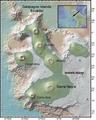
Sierra Negra Volcano, Galápagos Islands Deployment

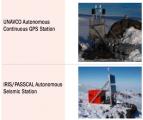
In July and August of 2009, seven scientists deployed several seismic sensors for a two-year multidisciplinary study of one of the world's most active volcanoes, the Sierra Negra Volcano of the Galápagos Islands. The project's official name is “Collaborative Research: An integrated seismic-geodetic study of active magmatic processes at Sierra Negra volcano, Galápagos Islands.”

Related categories:

Facility Plan for Polar Seismic and Geodetic Science is Available

The seismic and geodetic Polar communities have worked with EarthScope and UNAVCO to provide a plan for the growth, development, management and governance of Polar support services for the NSF facilities. This plan is now complete and posted on the EarthScope webpage.

Here is the executive summary from the report:

Related categories:

APOS Report Now Available Online

The report of the Autonomous Polar Observing Systems Workshop (APOS) has been posted online at EarthScope, and can be downloaded (2 MB PDF, 32 pages).  Several EarthScope and EPIC staff participated in this workshop and contributed to the report.

Related categories:

EarthScope/EPIC Celebrates Career of Jim Fowler

Jim Fowler started as EarthScope Chief Engineer in 1984, and became the founding manager for the EPIC program.  In 1999, he relocated from Washington D.C. back to his home state of New Mexico, and set up an office in the EPIC.  As a news article from New Mexico Tech noted,

"My wife, Cynthia, and I are originally from New Mexico, so it really wasn't as difficult for us to move here as it might have been for someone who's a hardcore 'Easterner,'" Fowler says.

"Since most of my work involved the Instrument Center, it seemed best for all concerns if my office was actually located at the Instrument Center," Fowler points out. "Basically, instead of living in Washington and commuting to New Mexico, I now live in New Mexico and commute to Washington."


Related categories:

August/September 2009 New Mexico Earthquake Swarm in the Central Rio Grande Rift

Courtesy Jana Pursley, NMT

Seismicity in central New Mexico, southwestern United States, is dominated by earthquakes occurring above the mid-crustal Socorro Magma Body (SMB). The SMB is a sill-like feature ≥ 3400 km2 in area, with a top surface at 19-km depth spanning the inner Rio Grande rift half-graben system. Inflation of the magma body at rates of several mm/year, perhaps coupled with shallow transport of aqueous fluids, is the prevailing model for the region’s long-standing and anomalous seismicity. Clustered swarms of small magnitude earthquakes have been noted since the 1860s throughout this region, and have been recorded instrumentally since the early 1960’s (Figure 1, blue squares, Sanford et al., 20021).

Related categories:

2011 Seismic Instrumentation Technology Symposium Presentations Available On-Line

The 2011 Seismic Instrumentation Technology Symposium was held at Albuquerque Marriott on June 16 - June 17, 2011. This was the second joint Seismology/Earthquake Engineering/DOD symposium on seismic instrumentation technology.  The symposium theme was exploration of emerging instrumentation technologies providing solutions for key technical challenges in observational seismology. Symposium presentations highlighted operator perspectives on these challenges, as well as on emerging technologies in the thematic areas of communications, power, and timing. The symposium focused on creating and facilitating a dialog between academia, industry, and others.

Related categories:

Conviction of Italian Seismologists Overturned in Appeal

Angus Mackinnon of phys.org reported on November 10th, 2014 that

"Seven Italian scientists who faced jail for failing to predict a deadly 2009 earthquake were cleared Monday of manslaughter convictions that had sparked international outrage.

The seven men were sentenced to six years in jail in October 2012 after a court in the medieval town of L'Aquila found them guilty of causing multiple deaths by having negligently downplayed the risk of the town being hit by a major earthquake just days before the killer tremor struck in April 2009."

Related categories:

Transportable Array demonstrates its new drilling rig and sensor emplacement routine for EPIC.

March 7th, 2017

With the expansion of TA Alaska into even more remote regions of Alaska and Canada it was necessary to develop and construct an extremely lightweight, high performance helicopter portable air rotary drill weighing less than 1700 lbs and capable of installing a 6” steel casing 2.7m deep in any type of ground including solid rock, frost shattered overburden, cobbles and frozen soils.  Based on these parameters, a custom drill rig system was commissioned and tested by EarthScope for specific use on the project.  At EPIC we had the opportunity to be among the first testing locations for the newly constructed third generation Purple Drill.  Ryan Bierma, and Max Enders along with Bob Busby from EarthScope and Mike Lundgren  from Lundgren Systems (rig developer) operated the rig, and then Ryan and Max demonstrated a mock installation of an STS-5A seismic sensor at the test site behind EPIC in Socorro, NM.


PH5 Data Flow

PH5 data flow. The left column shows the general process one follows during the preparation of a PH5 data set.  The right side shows the various software tools and files necessary to complete the process.

Related categories:

Pre-AGU EPIC Users PH5 Workshop 2017

Late-stage graduate students! Postdocs! Researchers and faculty!

EarthScope EPIC would like to invite you to register for our EPIC Users Workshop to be held on Sunday December 10th, 2017 (the day before the beginning of the AGU Fall meeting). 

This year's workshop will be a hands-on training session covering the complete process to build a PH5 archive, starting from 'raw' data and moving to a complete archive ready to be shipped to the PIC. We will provide a standard data set for the hands-on exercise so that participants can familiarize themselves with procedures for building and verifying a PH5 archive from raw data.